Zirconia vs. Titanium Dental Implants: Which Material Is Better?
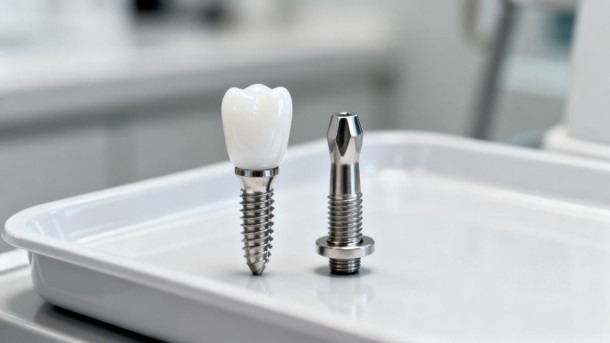
How Zirconia and Titanium Dental Implants Differ
When a tooth is replaced with an implant, the material is only one part of the decision. The implant's shape, connection, surface, and position all affect how it functions in the mouth. Zirconia and titanium can both support fixed restorations, but they bring different strengths and limitations to the treatment conversation, and it's a good topic to bring up during your implant candidacy evaluation.
What Zirconia Implants Are Made Of
Zirconia implants are made from zirconium dioxide, a strong, tooth-colored ceramic. The material contains no metal and is typically manufactured as a dense, highly engineered ceramic intended for use in the body. Its pale color can be appealing where the gum tissue is thin or the implant may become slightly visible.
Ceramic does not mean fragile by definition, but zirconia behaves differently from titanium under force. It is rigid and does not flex in the same way, so implant design and bite assessment matter when selecting it for a particular site.
What Titanium Implants Are Made Of
Titanium implants are made from commercially pure titanium or titanium alloys selected for strength, corrosion resistance, and compatibility with body tissues. Titanium has been used in implant dentistry for decades, giving clinicians extensive experience with its surgical and restorative applications.
The metal is usually hidden within the jawbone and beneath the gum. A separate abutment commonly connects the implant to the crown, although the exact arrangement depends on the implant system and the restoration being planned. You can learn more about our approach on our dental implants page.
How Each Material Bonds With the Jawbone
Both materials can undergo osseointegration, the process in which bone grows closely around the implant surface and helps stabilize it. This is not an instant glue-like bond. Healing depends on the implant surface, surgical technique, bone quality, loading forces, and the patient's general health.
A successful bond gives the restoration a stable foundation for chewing. If healing is disturbed by infection, excessive movement, smoking, uncontrolled medical conditions, or poor oral hygiene, either type of implant can struggle regardless of its material.
Why Implant Design Matters as Much as Material
A material comparison can be useful, but it should not obscure the role of geometry. Diameter, length, thread pattern, surface treatment, connection design, and the number of implants supporting a restoration all influence how forces are distributed.
The same material may perform differently in a front tooth, a molar, or a full-arch restoration. The complete treatment plan matters because the implant must work with the available bone, the bite, the gum contour, and the final crown or bridge.
Comparing Implant Success and Long-Term Performance
People often ask which material lasts longer, but survival statistics are shaped by more than the implant itself. Research generally supports titanium as the more extensively studied option, while modern zirconia systems have encouraging results but a shorter history and fewer long-term studies. Published survival rates should be read carefully, since a study may involve a particular implant system, patient group, treatment site, and follow-up period that can make a meaningful difference when comparing results.
Osseointegration provides the biological foundation for an implant. During healing, the jawbone must remain sufficiently stable around the implant while new bone develops at the surface. Initial stability comes from the fit of the implant in the bone, while longer-term stability depends heavily on healing and ongoing bone health.
Differences in Strength and Fracture Resistance
Titanium is known for its high strength and some ability to flex under load, which can be useful when chewing forces are substantial or the restoration has a complex design. Zirconia is strong and rigid, but its fracture behavior differs from that of a metal implant, particularly when thin sections, sharp transitions, or unfavorable forces are involved.
The practical effect depends on the complete system rather than on a material label alone.
Failure can occur early, when an implant does not integrate properly, or later, after the implant and restoration have been functioning. Infection around the implant, excessive force, bone loss, poor hygiene, smoking, and some medical conditions can raise risk. A failed implant is not automatically evidence that the material was unsuitable; identifying the cause is essential before considering another implant or a different design.
Aesthetics, Gum Health, and Biocompatibility
The visible part of an implant restoration is usually the crown, but the implant and abutment can still influence the appearance of the gumline. This is especially true in the front of the mouth, where thin tissue or gum recession may reveal a darker component beneath the crown. Neither option guarantees a perfect cosmetic result.
Gum thickness, bone contour, crown shape, hygiene, and the precision of placement often matter just as much as whether the implant is ceramic or metal.
Zirconia is tooth-colored rather than gray, so it may provide a more natural visual background under thin gum tissue, which can be attractive for a front-tooth restoration. Titanium itself is not normally visible when fully covered by healthy gum tissue, though in areas with very thin tissue or recession a grayish hue may sometimes show through. This possibility does not make titanium unsuitable; dentists can consider implant position, tissue thickness, grafting, abutment selection, and crown design when planning treatment in a highly visible area.
What "Metal-Free" Means for Patients
A metal-free implant approach generally means choosing a ceramic implant rather than a titanium implant. It does not necessarily mean every part of the restoration is made from the same ceramic, since the crown, connector, and other components may vary according to the selected system. Patients who prefer to avoid metal should ask exactly which components will be placed and whether the available design is appropriate for the tooth position, bone, bite, and restoration they need.
Which Implant Material Fits Different Patient Needs
There is no universal winner in the zirconia vs titanium dental implants discussion. A front-tooth patient with thin gums may weigh color heavily, while someone with strong chewing forces may place greater value on mechanical flexibility and a broad range of established components. Zirconia may be worth discussing when a patient wants a ceramic, metal-free implant or is concerned about the possible visibility of a darker implant component through thin gum tissue.
Titanium may be the more practical choice when the dentist needs a wide range of implant sizes, restorative connections, and treatment configurations. It can be particularly useful when the case involves complex restorative planning, limited space, heavy bite forces, or a need for a two-piece implant with adjustable components.
How Bone Density, Allergies, and Medical Conditions Affect the Decision
Bone volume and density determine whether an implant can be placed securely and whether grafting or staged treatment may be needed. The available vertical and horizontal space also affects implant diameter, length, angulation, and the shape of the final crown. Imaging helps the dentist evaluate these details before selecting an implant design and material.
True allergic reactions to titanium implants appear to be uncommon, but patients with a history of metal sensitivity should share that information before treatment. Diabetes, smoking, immune conditions, medications, bone disorders, and a history of gum disease can affect healing and long-term maintenance, so these factors deserve a complete review during your consultation.
Comparing the Treatment Process and Restoration Options
The broad stages of implant treatment are similar for both materials: examination, planning, placement, healing, and restoration. The details can differ because zirconia and titanium systems are not always designed in the same way. Some zirconia implants are manufactured as one piece, with the implant and abutment joined together, while others use a two-piece design that allows a separate connection for the crown.
Titanium systems are widely available in one-piece and two-piece configurations, with many choices for implant diameter, length, angulation, abutment form, and restoration type.
Zirconia may require especially careful attention to placement and loading because some designs have different mechanical characteristics and connection options. Titanium also requires precision; its established use does not remove the need for biological healing and bite control.
Cost, Insurance, and Maintenance
The price of an implant is rarely determined by the post alone. Examination, imaging, extraction, grafting, surgery, temporary teeth, the abutment, the crown, and follow-up care may all be included in the total. Zirconia implants can cost more in some practices because they may involve specialized systems, fewer available components, or different laboratory and planning requirements. A higher initial fee does not prove that zirconia will provide greater long-term value.
Dental insurance often treats implants and related restorations differently from routine preventive care. Some plans may cover part of the crown or extraction while excluding the implant surgery, grafting, or certain components. Ask for a written estimate that separates surgery, implant components, restoration, imaging, temporary work, and follow-up visits, and check our financial information page for details.
Cleaning and Maintaining Either Implant Type
Implant care is centered on keeping plaque away from the gumline and ensuring that the crown remains stable and cleansable. Brush twice daily with a soft toothbrush and use the interdental tool recommended for the shape of the restoration. Attend professional maintenance visits even when the implant feels normal:
- Brush gently along the gumline and around the crown
- Clean beneath bridges or around wider implant restorations
- Use floss, interdental brushes, or a water flosser as advised
- Report bleeding, swelling, looseness, discomfort, or a change in the bite
Titanium systems often have a broad supply of compatible components, which may make repairs or replacement parts easier to source. Zirconia systems can also be serviceable, but the available parts and repair approach depend more closely on the specific implant design.
How to Choose Between Zirconia and Titanium Implants
Choosing between these materials is best treated as a shared planning decision rather than a simple product comparison. The right answer depends on the tooth being replaced, the condition of the bone and gums, the bite, the restoration, and the dentist's experience with the selected system.
A useful consultation should leave you understanding not only which material is recommended, but why. Ask what implant design is being proposed, how the crown will connect, what alternatives exist, and what could change the treatment timeline.
Zirconia may offer a tooth-colored, metal-free option, while titanium generally offers extensive clinical experience, flexibility, and a wide selection of components. Neither choice eliminates the need for sound placement, a stable bite, and consistent hygiene. Learn more about our team's experience on our Meet Dr. Sasik page.
Conclusion
Zirconia and titanium dental implants can both be effective options, but they are not interchangeable in every situation. Zirconia may appeal to patients seeking a tooth-colored, metal-free approach, while titanium offers a long clinical history and broad restorative flexibility. A careful evaluation of bone, gums, bite, aesthetics, cost, and long-term care will usually lead to a more useful answer than choosing a material in isolation. Contact our Plymouth office to schedule a consultation.
Frequently Asked Questions
Are zirconia implants better than titanium implants?
Neither material is universally better. Zirconia may suit patients who prioritize a metal-free, tooth-colored option, while titanium may be preferable when extensive component choices, long-term clinical experience, or high mechanical flexibility are important.
Do zirconia implants integrate with bone?
Yes, zirconia implants can integrate with bone through osseointegration. Successful healing depends on the implant design, surface, surgical placement, bone quality, stability during healing, and the patient's overall health.
Are titanium implants safe for most patients?
Titanium implants have a long history of clinical use and are considered suitable for many patients. A dentist should still review medical history, allergies or sensitivities, gum health, bone condition, smoking, medications, and bite forces before treatment.
As the American Dental Association's MouthHealthy resource on implants notes, dental implants are made up of titanium and other materials compatible with the human body and are one of the biggest advances in dentistry in the past 40 years.
Which implant looks more natural?
Zirconia is tooth-colored and may be advantageous when thin gum tissue could reveal a darker underlying component. The final appearance also depends heavily on implant position, gum contour, crown design, bone support, and laboratory work.
Do zirconia implants last as long as titanium implants?
Titanium has more extensive long-term clinical data. Zirconia has shown encouraging results, but outcomes vary by system and patient, and the evidence is not equally mature for every zirconia design.
Does insurance cover zirconia or titanium implants?
Coverage varies by plan and may treat surgery, the implant, abutment, crown, grafting, and imaging separately. Request a written estimate and check exclusions, waiting periods, annual limits, and preauthorization requirements.
How do you care for an implant after treatment?
Brush around the implant and crown, clean between and beneath the restoration as advised, avoid ignoring bleeding or swelling, and attend regular professional maintenance visits. Good daily plaque control supports the tissues around either implant material.
About the Author
Metropolitan Prosthodontics is located at 3455 Plymouth Blvd #250, Plymouth, MN 55447. The practice is led by Dr. Christopher Sasik, DDS, a graduate of the University of Minnesota School of Dentistry who completed three years of residency training in Prosthodontics and Maxillofacial Prosthetics at the Mayo Clinic/Mayo Graduate School of Medicine, providing dental implant restorations, crowns, bridges, dentures, and cosmetic dentistry to patients throughout Plymouth and the greater Minneapolis area.
Disclaimer
The information provided in this article is for educational purposes only and does not constitute professional dental advice, diagnosis, or treatment recommendations. Whether zirconia or titanium implants are right for you can only be determined through an in-person evaluation. Always consult your dentist with any questions regarding your treatment.
Blog Post Author

Contributed by DentalROI
DentalROI provides relevant dental content to help providers educate patients. The statements, services, and products referenced in this article have not been evaluated by the Food and Drug Administration, and they are not intended as a substitute for professional medical advice, diagnosis, or treatment. Always seek the advice of your dental provider with any questions or issues you may have. Specific recommendations may vary in different circumstances, so individual consultation is important.
