
What Are Dentures Made Of? Materials Explained
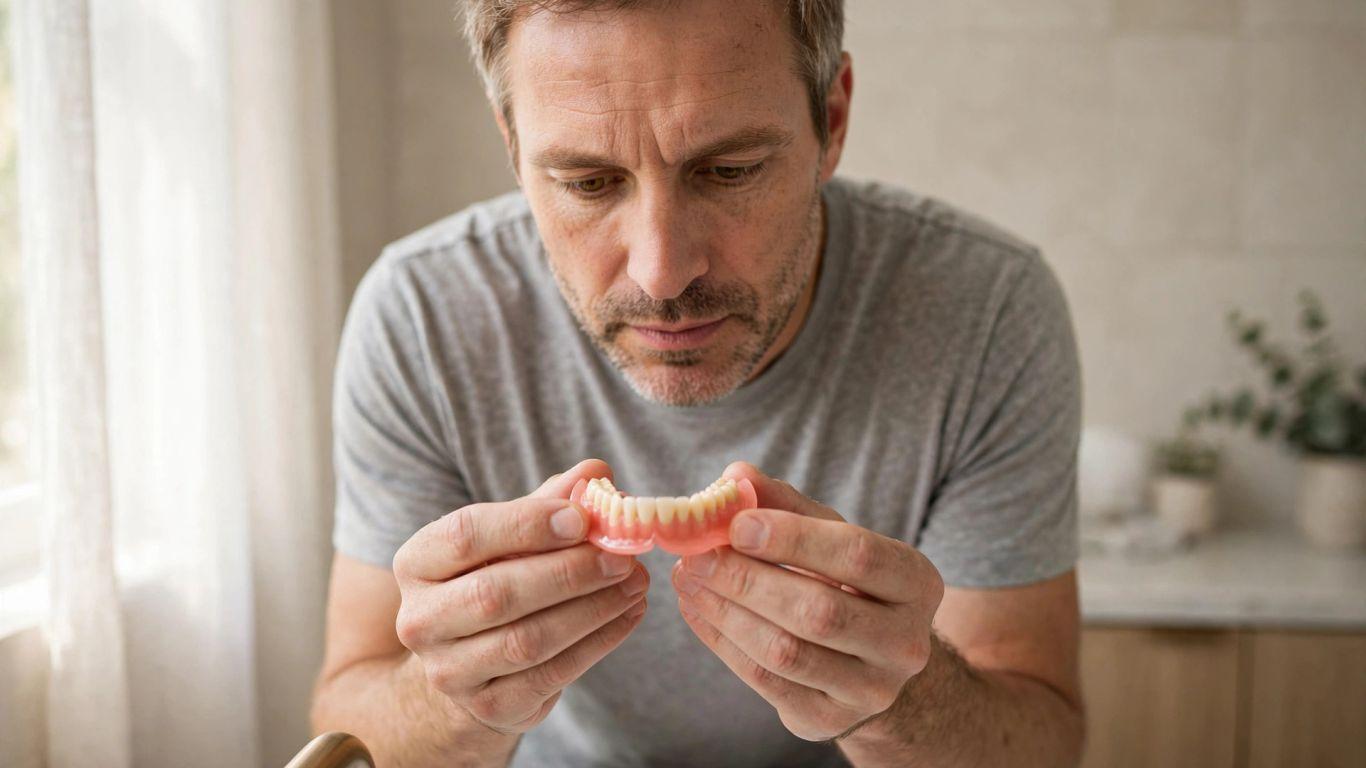
A denture is a removable replacement for some or all of a person’s teeth, and its materials depend partly on the design. A full denture usually has a gum-colored base and artificial teeth, while a partial may also include a framework or clasps. Implant-supported designs add components that connect the denture to implants. Knowing what each part does makes it easier to understand why the answer can vary.
The main parts of a denture
The base that rests against your gums
The base holds the replacement teeth in position and sits against the gums. It is often made from a resin shaped to fit the mouth, with a color chosen to resemble gum tissue. A comfortable fit matters as much as the base material, since changes in the gums and jaw can affect how a denture rests over time.
Artificial teeth that replace missing ones
The teeth are attached to the base and shaped to restore a natural-looking smile and help with chewing. They may be made from acrylic resin, porcelain, or composite materials, each with a different balance of weight, wear resistance, appearance, and ease of adjustment.
Clasps and attachments that help hold dentures in place
Some partial dentures use clasps that grip remaining natural teeth, while implant-supported dentures may use specialized attachments. These parts help with retention, but the type and position are chosen for the person’s mouth rather than by material alone.
Materials used for full denture bases
A full denture base needs to hold its shape while resting against delicate oral tissues. The right choice depends on the design, fit, and the person’s circumstances. Learn more about our Plymouth dentures.
Acrylic resin is the common standard
Acrylic resin, often called PMMA, is a familiar material for full denture bases. It can be shaped to fit the mouth and tinted to approximate gum tissue. It is adjustable, though acrylic can still crack if dropped or subjected to substantial force.
High-impact acrylic can better resist everyday knocks
Some bases use modified, high-impact acrylic intended to improve resistance to fracture. That can help if a denture is dropped during cleaning, but it does not make the appliance unbreakable.
Milled and printed resins offer different ways to make a base
Some bases are made using digital methods. Milling shapes a base from a prepared resin blank, while printing builds it in layers. The final result still depends on the design, the material, and how accurately the denture fits.
Why flexible materials are less common for full dentures
A full denture needs a base that can support a complete set of teeth and maintain a stable fit. A more flexible base may be harder to adjust, reline, or repair, so flexibility alone does not make a material better for a full denture.
Materials used for denture teeth
Denture teeth are selected for more than color. Their material affects how they wear, how they can be adjusted, and how they interact with opposing teeth.
Acrylic teeth are lightweight and easy to adjust
Acrylic teeth are relatively lightweight and can be adjusted by a dental professional, though their surface can wear with use.
Porcelain teeth resist wear but can feel harder
Porcelain teeth generally resist surface wear, though they can chip or fracture if struck and may feel harder against opposing natural teeth.
Composite teeth balance appearance and repairability
Composite denture teeth combine resin with filler materials. They can offer a natural-looking appearance, and some types can be repaired or adjusted.
How tooth material can affect the teeth you bite against
Denture teeth contact the opposing teeth during chewing, so the choice is not just about appearance.
| Tooth material | General consideration | Possible trade-off |
|---|---|---|
| Acrylic | Lightweight and adjustable | Can wear over time |
| Porcelain | Resistant to surface wear | Harder contact; may chip or fracture |
| Composite | Can balance appearance and adjustability | Properties vary by formulation |
A dentist can consider the opposing natural teeth, restorations, and bite when recommending a material.
What partial dentures are made of
Partial dentures replace some missing teeth while fitting around the teeth that remain. Their materials may include an acrylic base, a metal framework, or a flexible thermoplastic, along with artificial teeth. See how to choose between a fixed bridge and a removable partial denture.
Acrylic bases suit some temporary or lower-cost partials
An acrylic partial has a resin base that holds replacement teeth and may include clasps. It can be bulkier than a metal-framework option.
Cobalt-chromium frameworks are thin and sturdy
Some partials use a cobalt-chromium alloy framework, which can be relatively thin and sturdy. Visible metal may be a consideration for some wearers.
Flexible thermoplastics can avoid visible metal clasps
Flexible thermoplastic partials can be designed without conventional metal clasps, but that flexibility may not suit every case.
Trade-offs in comfort, repair, and long-term fit
Some practical questions can frame a conversation with a dentist before choosing a partial:
- Will the appliance be temporary or intended for longer-term use?
- How will it be retained around the remaining teeth?
- Can the material be adjusted or repaired if needed?
- What changes in fit might require a follow-up visit?
Materials in implant-supported dentures
Implant-supported dentures use dental implants for support or retention, but the denture itself still has a base and replacement teeth. See our dental implants page for more.
Acrylic or resin teeth and bases keep the denture lightweight
Acrylic or other resin materials may be used for the teeth and base, helping keep the prosthesis relatively lightweight.
Metal frameworks can add strength beneath the teeth
Some designs include a metal framework under the teeth and base for additional structural support. It is not a feature of every implant-supported denture.
Titanium attachments connect the denture to implants
Titanium components may be used in the implant system and in attachments that connect a removable denture to implants.
Fixed and removable designs use materials differently
A removable implant-supported denture can be taken out for cleaning, while a fixed design is secured in place. Read fixed dentures vs. removable dentures for a comparison.
Choosing and caring for denture materials
Material choices are made alongside decisions about fit, function, and the health of the mouth. A dentist can help compare options in light of your bite, remaining teeth, and preferences.
Match the material to your bite and gum health
Bite forces and the condition of the gums can influence which materials and designs are appropriate. Changes in gum tissue can also affect fit, so follow-up care matters.
Weigh appearance, comfort, durability, and cost
There is no material that is best on every measure.
| Consideration | What to discuss |
|---|---|
| Appearance | Shade and how much of the material is visible |
| Comfort | Fit, bulk, and contact with the gums |
| Durability | Wear, fracture risk, and the forces in your bite |
| Cost | Upfront expense and possible future maintenance |
Follow cleaning guidance to avoid scratches and warping
Care instructions depend on the material, so follow your dental professional’s guidance.
- Rinse the denture after meals when practical.
- Use a denture brush and a cleaner recommended for its material.
- Avoid hot or boiling water, which can change the shape of some dentures.
- Store the denture as directed when it is not being worn.
Our denture care guide has more daily tips.
Ask your dentist whether repairs or adjustments are possible
Some materials and designs are easier to adjust or repair than others. A denture that feels loose or causes sore spots may need professional assessment, not simply a different cleaning routine.
Conclusion
Dentures combine a base, artificial teeth, and—in some designs—frameworks or attachments made from different materials. Acrylic and other resins are common, while porcelain, composites, metals, and titanium components may have roles in particular designs. For additional background, see the American Dental Association’s MouthHealthy dentures guide. To discuss which combination suits you, contact our Plymouth office.
Frequently Asked Questions
What is the most common material for a denture base?
Acrylic resin, often called PMMA, is a common material for full denture bases. Other materials and manufacturing methods may be used depending on the design.
Are denture teeth made of the same material as the base?
Not always. A denture may combine a resin base with artificial teeth made from acrylic, porcelain, or composite materials.
Are porcelain denture teeth better than acrylic ones?
Neither is best for everyone. Porcelain generally resists surface wear but can feel harder against opposing teeth, while acrylic is lightweight and easier to adjust.
What are partial dentures made of?
Partial dentures may use an acrylic base, a cobalt-chromium framework, flexible thermoplastic, or a combination of materials. The design depends on the teeth that remain and the intended use.
Do flexible dentures contain metal?
Some flexible partial dentures are designed to avoid visible metal clasps. Materials and designs vary, so a dental professional can explain what a specific appliance contains.
What materials are used in implant-supported dentures?
They may include resin or acrylic teeth and bases, a metal framework, and titanium implant or attachment components. The exact combination depends on whether the denture is fixed or removable and on its design.
Can a denture be repaired if it cracks?
Some cracks and other damage can be repaired, but the options depend on the material, design, and extent of the damage. Have a dental professional assess it rather than attempting a home repair.
About the Author
This article was prepared for Metropolitan Prosthodontics, 3455 Plymouth Blvd #250, Plymouth, MN 55447, and reflects the experience of Dr. Christopher Sasik, DDS. Dr. Sasik earned his DDS from the University of Minnesota, graduating at the top of his class, and completed a three-year residency in Prosthodontics and Maxillofacial Prosthetics at the Mayo Clinic/Mayo Graduate School of Medicine. He is a former assistant professor at the University of Minnesota School of Dentistry, a member of the Cleft and Craniofacial Program at Children’s Hospital in Minneapolis, and a member of the Minnesota Dental Association, Academy of Osseointegration, American College of Prosthodontists, American Academy of Maxillofacial Prosthetics, and American Dental Association.
Disclaimer
This content is for general educational purposes only and is not a substitute for professional dental advice, diagnosis, or treatment. Consult a qualified dental professional about your specific situation.
Blog Post Author

Contributed by DentalROI
DentalROI provides relevant dental content to help providers educate patients. The statements, services, and products referenced in this article have not been evaluated by the Food and Drug Administration, and they are not intended as a substitute for professional medical advice, diagnosis, or treatment. Always seek the advice of your dental provider with any questions or issues you may have. Specific recommendations may vary in different circumstances, so individual consultation is important.
